Instructions for putting the summer away

1)     Yesterday’s sandcastles, like other peoples’ relationships, are inexplicable. On the last day of summer they need to be ignored.

2)     Deck chairs live in garages through the rainy months before coming into their own again. Oil before storage.

3)     Many buckets and spades do not survive the February clear out and will need to be renewed. Alternatively dry, remove sand and place them carefully on the third shelf by the loo.

4)     A beach towel after a December bath holds the promise of the months to come.

5)     All photos should be saved right away so as not to be deleted when the memory becomes full.

6)     The grasses in the sand dunes will hold the boys wars in their roots until next year – both roots and boys remember.

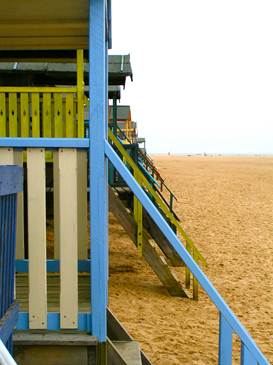
7)     Beach huts define borders of childhood like sentry posts control countries. They must never be entered after September 15th because of the danger of breathing in melancholy.

8)     Patterns of tidal withdrawal are each different, each the same. Like families. These patterns should not be considered in winter months because of the strong danger of wistfulness.

Tidy up


Leave their clothes as they drop

before baths

before bed

The crumpled trousers

Creased

Greased

from days of play

the blackened bottoms of their white socks

just as they tossed them

i know they should pick them up

put them away

learn all those lessons

for their later days

but I leave till the morning

the mess of their being

I know

I will glance

At an hoovered empty rug

And remember

each shadow

each mud splat

exactly as they lay

Prose version: the General

The general

As a shared custody parent I have fifty per cent of the time with my kids, half the holidays, half the week and every other weekend. It is all written out in courier font in papers kept safe in my desk. Half the time. In the early years, my half of the time had to be filled with twice as much activity: making and doing, painting and playing, trips and walking. After a couple of years I began to realise how physically close I liked to keep the kids when I was with them, as though I could double my time through proximity. But gradually I began to give them more space, or perhaps more accurately, gradually they began to take it. One walk sticks in my mind. There was a heavy laden sky and much debate about whether or not we should risk the walk going to the beach. The breeze was warm so we decided to give it a go. We were in Norfolk again. My eldest came along. Hurling pebbles into the sea and skimming bouncers, scattering ladybirds with bomber attacks. Stopping to collect a shell then darting down to the water’s edge to skim a bouncer. Along the stony banks, against the greened sea, slowly waging his battle, along he comes the general of all he can see. Suddenly I realise he is 200m behind me. Has he ever been so far away and on his own? Impervious to the deepening rain he ignores every shout. Unmoved by the hardening wind I see him alone, silhouetted against the rising storm, beyond reach if waves should crush him. I feel scared for him but I do not run. He looks up. Not alarmed, swaggers towards us, his pace says, “I’m ok Dad”. He catches up at last. But just before the car, I feel his hand hard in mine, as if to say: “We both knew this day would come.”

the general

The general

Heavy laden sky

warm breeze

we risk the walk.


Hurling stones

Scattering ladybirds

Collecting shells

Skimming bouncers


Along stones’ banks

Against the greened sea

slowly waging his battle

the general of all he can see


100m behind us

But far ahead in the walk’s call

He ignores every shout

Impervious to the deepening rain

Unmoved by the hardening wind

I see him alone

Silhouetted against the rising storm

Beyond reach if waves

Should crush him

He looks up

Not alarmed

Swaggers towards us slowly

His pace to say, “I’m ok Dad”

But chatting us up at last

Before the car

I feel his hand hard

As if to say

We both knew this walk

Would one day come.

The old bookshop cafe

The old bookshop cafe

A policy forcing the sea to reclaim its inheritance washed the café at Cley beach car park away.

Centuries ago

Over bacon rolls

mugs of tea

we dreamed of being a family

Reclaiming myself

I removed the sluice gates you built into me

Opened to the sea

A new landscape

Unprotected coast

Felt free

Not quite me

Undressed  like the sand banks

The sea now more quickly erodes.

The elements and me.


Do you need a hand?

Do you need a hand?

It is a cliché of bad stand up comics – both sexist and feminist, that men spend their lives condescending to women about their ability to do perfectly easy jobs that women just can’t be bothered to do: things like change light bulbs, fuses, car tyres etc. So it is only to be expected that when a Dad is performing simple parenting tasks he should be challenged about it. When the kids were tiny and I was still married to their mother, this often came up with strangers and usually in the baby changing room of John Lewis. Changing his nappy for the millionth time, I would be told to be careful by the passing granny. Then the smile and “Oh aren’t you good dear”. Or, “don’t do it like that, dear” Or, “she is hungry / thirsty / tired / needs changing”. etc etc.

On one level it is entirely understandable and an almost necessary revenge. On the other hand the cold hard facts work both ways. Changing a nappy is more difficult than changing a plug or a light bulb and gender is completely irrelevant in terms of one’s ability to complete the task.  This is the great heterosexual, still married, conspiracy. It suits men to pretend that some jobs are more difficult than they are so they can kill time by doing them. It suits many women because although their partners can’t be trusted to do important things at least they can do these little manual chores. It suits both when all is going well because spheres of influence are maintained. But in fact it is all crap – and not only the nappies. Changing nappies is difficult, more difficult doing boys, who, when the cold hits, can projectile pee uncontrollably and at distance, but it is doable and with practice gets easier. Changing a fuse is easy, as is changing a tyre or indeed, defragmenting a computer. There is absolutely nothing difficult about any of these things and there are professionals of both genders in these areas to prove it. So it is a conspiracy of the married coupledoms against the unmarried singletons and it should not be allowed to stand. Men get some kid shit on your hands AND master Velcro. Women, flip the switch in the box and it all works again. I feel as though I have revealed a gender secret. Yes just flip the switch, and if neither of you are prepared to countenance such a redistribution of Labour, get some help. But be very afraid of the cost of a nanny or rewiring.
Too Many Mothers

Too Many Mothers.

Postcard

Postcard

Soft light of Muckledyke evening

Turn of wave on Wells’ shore

Three geese swing west in formation

Children’s laughter rising

Deep grooves ploughed in field sit secure

Surprise view on road rising

Right pebble from Cley reassures

Sunsets over marshes

Mud splats returning

Our understanding

Stars on a Muckledyke night

Mist on Holkham new year’s morn

Full flight over Morston

Faces of the mud sliders

Poppies in the fields’ verges

Pebble in pocket when forlorn

Rising sun at five bridges

Landscaped sky a perpetual dawn

Our love making

Moments of separation

Moments of separation

The structure of shared parenting seems complex to those outside it. Friends try to remember the arrangements of who is with whom and look at you with pity – how do you keep it in your head? There are problems. Mostly, these revolve around stuff. His stuff.  Her stuff.  School stuff. Play stuff. If the kids go over to her place in civvies but come back direct from school eventually there will be no more clothes left in my flat. If the kids leave my place in uniform and come back in uniform then one day there will be no more uniform left at her house. If one kid needs x for school on Monday then where is it on the Wednesday before? There is also the question of the contents of school bags. This is a mystery to most parents but for us it cannot be because things in the wrong house cannot just be found upstairs. We need to check it every week and ensure that all the kit that will be needed is included. Things get forgotten, of course they do, but by and large it all works out ok. Most of it is indeed fine until it is time for them to go. Then the screen of normality and adjustment slips. The moments of transition from one family to the other seem to last forever. The tears are short-lived or absent these days, within half an hour, or sometimes half a second, they are in their other home, other room, other games, other reality. Though that is not quite right. It is not their other reality. Both sides of this life are one for them. From the inside of the shared custody life the meaning of normal is different. For them this pattern of life has endured for nearly five years. As they approach secondary school, this double layered existence is normality for them. The division between the two homes becomes standard. But for me, the still emptiness of the flat after they have gone remains an almost unbearable form of desolation. Divorce is a gift that keeps taking.

Indifference

Indifference

Other Dads can be hard to deal with. Some of hardest of all are those who are always on about “these bloody kids”, “let’s get rid of them and go down the pub”. The mild variety of this joke is fine, indeed it is real. We all feel like a break from our kids at times, even if you only have them half the week. There are moments when “ratty daddy” appears and it is best to withdraw for a while to your room or some other grown up space – the loo is good. Twenty minutes with a book on the loo and everything that was about to make you defenestrate your loved ones has gone away. You see the normally annoying behaviour clearly again. So we all bitch about them. But there is a line at which remorseless sarcasm directed at your kids actually becomes something deeper and disturbing – it becomes hate. Some parents hate their kids. In my experience there are two types of child hating men: the disparagers and the destroyers. The disparagers are just as often women. It is a reflex reaction in some over-attentive parents to assume that everything their child does is a little better, sooner, nicer and  funnier than the things that other children do. [Except in the case of my kids when this is, of course, all true].

Then there are those for whom their child can do no good, nothing they do is good enough, fast enough, neat enough. It is not a violent reaction. The men go through the motions of caring for their children, but they never praise them. The extreme kind constantly compare themselves to their kids, especially their boys. It is unrelenting, slow, torture. The destroyers use the power of silent indifference. Hunched over their blackberry/newspaper/ cigarette/can of beer, no volume of child noise seems capable of penetrating them. Their indifference is a weapon of destruction. The children shrink away, doing more and more extreme things to break through until a hand or a word lashes out and destroys its target. They might feel remorse after but the pattern reoccurs. This is not a case for the social services, it is a normal parenting reality. And these kids will do the same to their children.