Sonhood 5

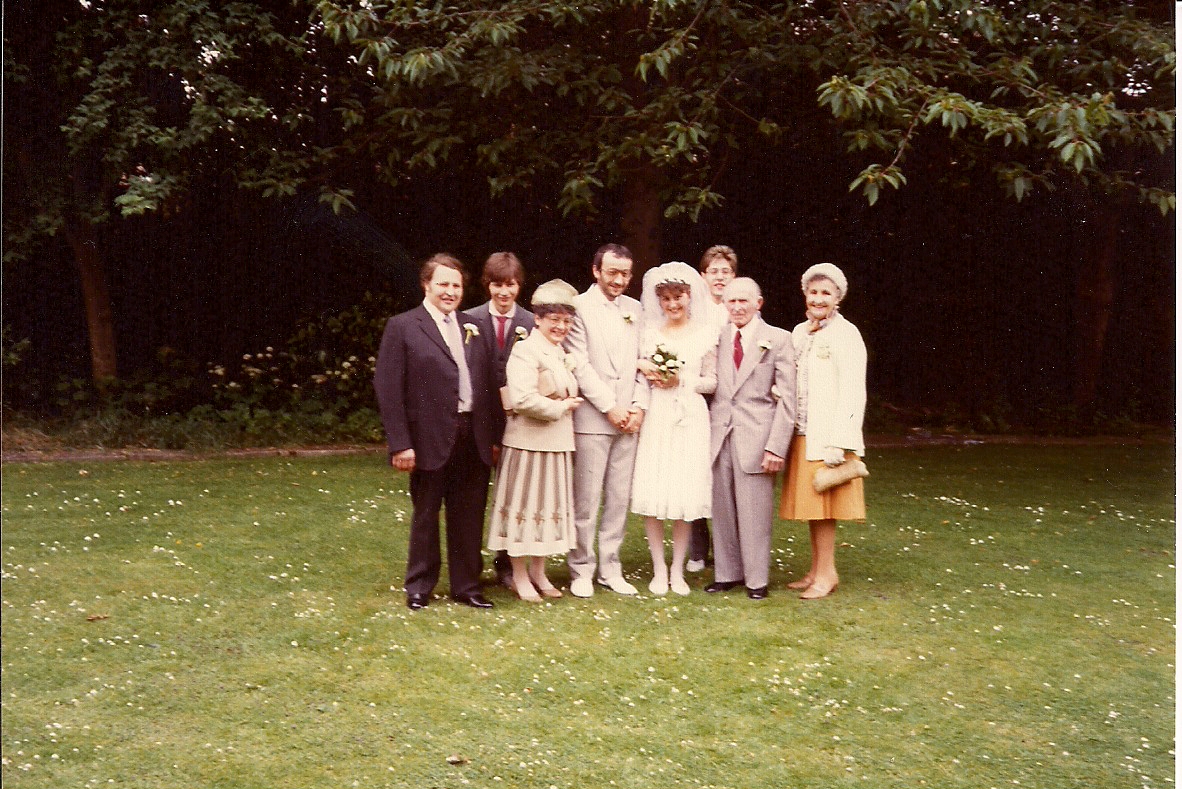
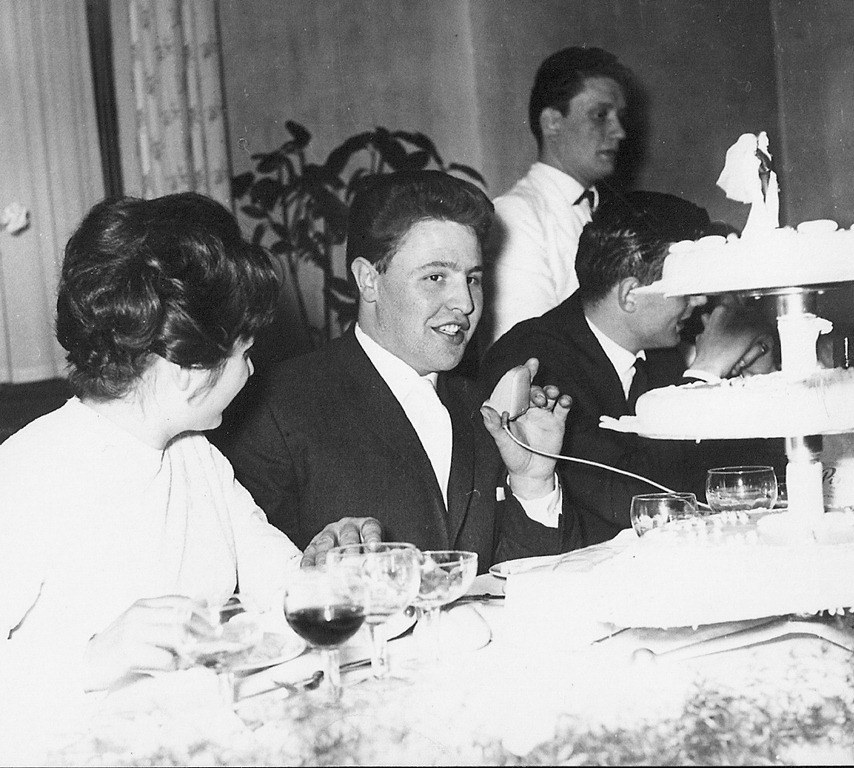
Scan_Pic0005My parents on their wedding day

Sonhood 1, Sonhood 2, Sonhood 3, Sonhood 4

My mother came to Britain from Italy in the late 1950s and still had a large family around Lake Garda in the North. Some years we would go to them. At the end of the intense period of work there would be the added excitement of the journey: who was flying when and where were we going? I loved airports and always hoped that flights would be delayed for as long as possible.

On one occasion my father was flying a little later than the rest of us. We had driven in a white Alfa Romeo across France to Italy, my mother running the red lights in France because she was too short to see them overhead. Sitting on the plane Dad discovered that the man next to him was a distant relative. My Dad’s people came from a small village around Pellegrino near Parma. My grandparents retired there in the 1960s and we used to go and visit. There is a hill above the village that is almost entirely occupied by Brivati. When you walk around it on seemingly endless hot days trying to catch lizards in that arid atmosphere, everyone you meet is a second or third cousin, sometimes removed. The man on the plane was related to people from this hillside. When Dad finally arrived he was full of this story. We had a memorable Christmas day. It was memorable for two reasons. First, we had the most amazing Christmas lunch “prepared” by Auntie Dina in the tiny flat she shared in the centre of Padua with Auntie Laura. Second, my Dad decided we were not allowed to open our presents until after lunch. With nothing to do all morning except wait, we watched Dina and wondered when she was going to start cooking lunch. Periodically, someone would say, “Shouldn’t you start the lunch?” To which Dina replied, “No, its fine”. My mother became a little nervous. I could tell a fight between the sisters was brewing. These fights had by then being going on for forty or fifty years. They were short bloody contests to achieve sibling dominance. We were spared a full-blown encounter because the doorbell rang and the caterers delivered a complete Christmas meal. A delicious roast veal main course. Everyone laughed, we children most of all, because it meant the time for presents was closer.

Most years we would be staying at home. When work finished at lunchtime on Christmas Eve my father would start shopping. As I got older I tried to emulate his style. To an extent I still do. There has never been anything quite like the combination of feelings provoked by the switch from work to the Christmas holidays. One of the reasons I like writing, especially to a tight deadline, is because it comes close to stimulating that adrenaline rush of the bakery morning and the physical reality of accomplishment afterwards. A feeling accentuated at Christmas by the release from work, the million things to be done before Christmas morning and the compression of time in which to do them because the last shift doesn’t end until lunchtime on Christmas Eve. The tiredness mingled with excitement. The feeling of having earned rest all combined to make me love Christmas. Christmas was also the only time of the year that my Dad would join in the usual running of the home. Sometimes on a Saturday morning after work he would cook a fried breakfast. Aside from this he would never do any cooking and he certainly never baked anything at home. The joke, which was also the reality, was that we never had any cakes and the bread was always stale. But at Christmas he would sometimes cook and he would also play a board game with us.
Night


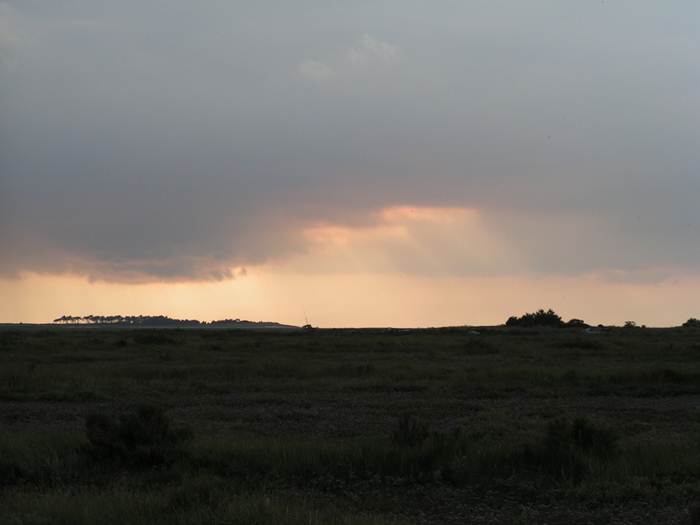
Red sky fading to aged tones

Late Rothko

Headlamps of the fishing cars returning fleet

Stages in night’s descent complete

Clouds threatening storm stationary

A rheumatic sky

Disappears

To stars revealed, moon: shines,

Red vanishes

Shepherd, delighted, sleeps

There is no finality in this night

Only the uncertainty of revelation

Darkness a vale of ignorance

An openness that

Scares us because it is not there

Like couples talking

Mistalking

Over time

Until a kind of silence

As couples

Suddenly see each other

When they retire

The barrier of enforced separation removed

We see into the others presence

Or, as couples grow old

Older

The barriers slip away

there is a merger

Of their souls

They do not go quietly but rather

Like birds at dawn

Greeting the end of night

Waking the Shepherd

They remember how to chatter

And welcome each sun, of everyday, they get to share.

I see night for the first time

Sonhood 4

Sonhood 1, Sonhood 2, Sonhood 3, Sonhood 4

The population that worked in the tourism trade inBournemouthwas almost as transient as the populations of visitors. Catering businesses could make a quick killing and there was a considerable turnover of cafes and snack bars.

The area was evolving and growing. The nature of the market place for baking goods was also becoming more complicated and competitive. ThepeakofDad’s business coincided with the beginning of the transformation of the English High Street. The opening hours of convenience stores began to grow longer. At first these were good customers for us but gradually they began to compete with our shops and demand larger and larger discounts.  Running a small business is always a balancing act, keeping all your balls in the air while trying to turn a profit is hard enough, doing it in the context of the vagaries of the English summer was sometimes next to impossible. Then the multinationals began to move into the neighbourhoods with reasonable quality bread and cakes available at hours to suit everyone. An unequal struggle became a hopeless one and many of these kinds of independent bakers disappeared or were replaced by a dwindling number of national chains.

Easter was the most lucrative festival of all. There was the mass production of thousands of hot cross buns that had a small margin but could be produced cheaply and in bulk. A little spice and the consistent supply of fresh sticky buns was the key to a successful hot cross bun operation. There were also the high margins on our own line of Easter Eggs and chocolate novelty animals. I still have some of the moulds and threaten each year to try and make them.  The summer also had bulk production but there were no really high margins to be made. At Christmas people wanted special cakes and puddings and these kept well and could be sent out in advance of the holiday itself. People also bought in bulk but this was concentrated into a couple of days. So though in terms of turnover Christmas was not the best season, in terms of effort it had the most sustained intensity. This was derived from the tradition of a general shut down for the holiday period.

The bakery and bakers’ shops would only be closed for two days at the most over the holidays. But even this brief closure inspired frenzied buying. For some reason the prospect of not being able to get fresh bread and cakes frightens the English – even though, unlike the French, they prefer old bread and will continue eating it long after it is stale. This has been an issue for many years. A writer in the Food Journal for 1870 lamented: “Why is it that, in this highly favoured Isle, we must refrain from eating fresh bread, as if it were poison; unless, indeed, one happens to possess the stomach of an ostrich and the constitution of a rhinoceros?”[1] I marvel sometimes as I walk around Sainsbury’s at the diversity and freshness that the supermarkets have brought to the British bakery scene. Though shelf after shelf of the cut bread remains it is now easy to find reasonably good quality fresh bread. And the prices! My Dad would have loved the idea of a £4 loaf of organic stone ground bread.

The holidays produced irrational consumers and a great deal of waste. They also had some peculiar influences on the nature of the bake house itself. While the bakery’s machinery worked normally during the party season that was often less true of the bakers. They had a tendency to let us down; there were more than the usual number of hangovers or “food poisonings”. Even when people did make it in, they were often very tired. But getting them in at all could be a struggle. I remember driving with my Dad to knock up bakers at their flats, which were often above our shops.  Standing outside at 4 or5amthrowing stones at windows and hammering on doors to get a shift of workers together. I always imagined that it was like working in a press gang for Hornblower’s navy.

The combination of the long closure, uncertainty over the staff and the rapidly accumulating snow made the build-up to this particular Christmas even more intense than usual. My father accentuated the sense of mounting tension by the slowness with which he would sometimes react to impending disaster. In part this extended to his way of preparing for Christmas. He would leave everything to the last moment. From my point of view this meant that the build-up to Christmas day was almost better that the day itself.


[1] The food journal,June 1, 1870, New Bread, p 241 (notebook page 18)

Sonhood 4

Sonhood 1, Sonhood 2, Sonhood 3

But back then in the late 1970s, there was sufficient of the old Bournemouth left out of season for its residual elegance to come through, even at times for the thing that had first attracted Tregonwell, the natural beauty of the place, to come through. On a cold clear winter morning, you could actually see the line ofBournemouth Bay. This huge natural harbour was a perfect curve of land. At beach level it was possible to see the long shore drift shapes of the sand at low tide, try and imagine the shape of the beach without the groans, wonder which hotels would have come down the cliff by now without human intervention. The beach was definitely a piece of scenery created by the local council. Every few years an enormous dredger would be deposited in the bay and this would force sand from several miles out to shore up the sand deposits held in place by he stone and metal groans. This ensured the claim of miles of golden sandy beaches remained true for a few more years. At these moments of the year it was possible to walk or cycle from Southbourne to Boscombe and only meet two other people who were out walking their dogs or taking a run. In winter storms you could stand on the prom and holding the rail tightly be buffeted by the wind and soaked by the waves.Bournemouthin winter was a great place to go through the late teens. Filled with adolescence angst, fuelled by a misreading of my tattered penguin special editions of Sartre and Camus, clothed in my overcoat, I would walk along the front uniquely understanding the elemental forces of nature around me. Or crouch beside a beach hut trying to light a cigarette as the wind blew in hard on stormy nights. It was essential to walk, read and smoke all at the same time and even in the driving rain.

When I was younger than this Bournemouthwas also a great place to be because of the simple fun of the beach, the proximity of the New Forest and the sense of safety. Much of this quality of life has disappeared from the town now. Drug, crime, drink infested, Bournemouth in the summer resembles one of the cheap resorts of Southern Spain and seems to have been encouraged as a matter of policy to do so. In the heyday of Annette’s Patisserie it remained the kind of town you would choose to bring a family up in. After our first few shops were opened, the business grew rapidly. We opened more of our own shops and increased our number of wholesale customers. Eventually we outgrew Kimberley Road and moved into a purpose built unit on an industrial estate called Elliot Road. At its peak the area covered by the customers of Annette’s Patisseries and its associated companies stretched from Rufus’s Stone outside Ringwood in Hampshire in the East to Wareham in Dorset in the west – with some bigger clients further afield.

The pressure of running the business was great. The economy of the area that the bakery served was based on the money spent by people taking holidays at the beach and camping in theNew Forest. There was some light industry around Poole and a growing number of corporate headquarters in Bournemouth and the surrounding area. But overall, tourism remained, as it had been since 1860s, the heart of the local economy. Feeding this rapidly expanding and broadly prosperous area of outstanding natural beauty required considerable nerve because the income streams were so uneven over the year and it was anyway a struggle to get by on the tight margins that baked goods offered. The three rich seasons were nicely spaced across the year but depressingly short. Christmas and Easter were busy in all bakeries but the third season was the summer and that only happened at the seaside.

The fact that the bakery was at the seaside obviously made a difference to its character and not just the commercial rhythm of the year. The summer season was basically the six weeks of the school summer holidays, in particular the two weeks in August when the factories in the north of England traditionally closed and entire work forces came to the seaside. Though the rise of the foreign package holiday had undoubtedly hit trade, a good proportion of these workers were still, in 1970s and early 1980s, visiting the coastal resorts ofEngland.Bournemouthwas a top destination, still a little bit posher than the resorts in the North and East of England.  For these six weeks of the summer the population of the area increased massively and the holiday parks – huge encampments of tents and caravans – filled to over flowing.  Being a baker on the coast was, for this short space of time, a licence to print money.

Sonhood 3

You can read Sonhood part 1 and part 2 here and here

There would come a moment at which the night production and the silences came together as the shift finished. And my Dad would make me a cup of tea and give me a bun. He would sit on the edge of the knocking out table and tell stories of the night’s shift, of what went wrong and what went right. I would sit on a jam tin and listen. Drink my tea and eat my bun.

My father was born in London during the Second World War and he always thought of himself as a Londoner. In the early 1960s he moved toBournemouth. At first he hated it. Every weekend he and mum would climb into their white MG convertible and drive back toLondonfor some “action”. Gradually he came to love the coast and would only reluctantly go back to the “smoke”. ButLondonremained his benchmark. If he was thinking about developing a new line he would say: “they would buy it inLondon. NotBournemouth. Bloody provinces”. When inLondonhe would admire the cake shops and marvel at the prices – “we could never charge that inBournemouth”.

He had worked his way through theNationalBakerySchoolat Borough Polytechnic, doing night shifts and then worked in banqueting. His move to the south coast of England was to take his first proper baking job at Wilkins the Bakers, his move was supposed to be temporary. This was the job that he had trained for. This was a time in which the notion of learning a trade based on a set of skills was the dominant way in which people prepared for their careers. This was still the era of a job for life.

After working at Wilkins for a time he opened his own shop onAlma Roadin the Charminster area ofBournemouthand then at937 Old Christchurch Road. The name above this shop was Annette’s Patisserie. Rather than pay for a new sign, this became the company’s name. 937, as we always called it, was a hot bread shop with the bakery at the back. We lived in the flat above, played in the small yard behind. My first memory is in that yard. At least I think I remember this but it maybe that I have just heard the story so often that it has become a memory. We were playing in the yard when some other children started bothering my older sister Claudia. I picked up a stick and with one hand holding up my nappy, threatened them with the stick if they did not leave her alone. Soon after this incident we moved to a bungalow in Christchurch and the bakery moved into bigger premises in Kimberley Road.

My own feelings about Bournemouth are ambivalent because it has changed so much since I was a child. It was always loud, over crowded and ugly during the summer season and even as a child it was the out of season Bournemouth that I liked best. I liked the town and the beach when they were not performing. Caught unawares in autumn and winter, thinking that no one was looking, the old bitchBournemouthseemed rather an elegant resort again, something she had once been. The deck chairs were put away. The snack bars closed and boarded up .Bournemouth’s famous municipal gardens were empty. The Chines – the long azalea and rhododendron-covered paths down to the beach – had no flowers. There was a quiet, closed feel to the town, a melancholy emptiness which made for a kind of beauty and peace. You could see the elegance of some of the buildings. In the off season the underlying respectability of its large retired population asserted itself over the gauche posturing that was stirred by the sun and talk of the southernRiviera. This silent majority, who for nine months of the year went about their quiet business of strolling and enjoying the air tended to become invisible in the summer. But in the off season the signs for their bingo nights were pasted up over the adverts for the lap-dancing clubs. In the course of my childhood, the beautiful people, too poor to afford the real thing brought their nightclubs and drugs to the town and it changed, not just in the season but all year round.

Special Advisers to the divorcing man


Pull back.

Close Down.

 Keep it in.

Weather the storm.

Tighten up.

Buckle down.

Snap out.

Stay put.

Get laid.

Give it time.

Be more proud.

Don’t expect.

Feel less.

Think less.

Speak less.

Speak more.

Think more.

Feel more.

Stay.

Go.

Jump.

Fall.

My life can now be summed up in micro-sentences

Each prescribed as cure.

Lamb

On discovery channel

His head under my arm

In the first moment

White flesh soaked

Short hair

We agonise

As the lamb

Cannot feed

We watched him

That first day

Our lamb breathed

He did not feed

I squeeze him tighter

Dad, it is only a lamb

We look for too many clues

It is difficult to reinvent

Seeing that first feeding frenzy

When finally we gave him a bottle

As the blueprint for their beings

Leftover

Food for them

Old and young

His compelling beginning

Dad stop squeezing, I can’t breath

The lamb jumps up

Walks, weakly, step by step.

I release my grip

Goals

There was no finer goal

Than between the bedroom door

He a striker in the premier league

She as my defender

Three and you’re in

Endless night after night

In my divorced dadflat

Pure undivided skill

The commentary to the game

The endless victories won

She became a ball of will

He rolled himself up

They stopped skipping as they ran

Between us no silence

Our noise is different now

Sonhood 2

The main jobs I did in Dad’s bakeries were frying doughnuts and packing orders ready for dispatch. But I was also a general odd job boy. Sometimes I would start the process from the beginning and take it all the way through to whatever means of cooking was being used – baking or frying. Sometimes I would do one part of the process, adding cherries, sprinkling nuts, dipping the choux paste cases into chocolate, putting fondant on the Danish pastries, traying up the finished but uncooked goods, brushing on the egg wash finish which gave a brown crust to puff pastry, making custard tart pastry shells, assembling the dough mixes, traying up as the loaves came out of the five deck oven, greasing the tins, making the apple turnovers, filling the mince pies, putting the flakes on the chocolate flake cakes, mixing the Eccles filling, filling the jam tarts, creaming up the éclairs, bagging the roles, slicing the loaves for cut bread and, of course, making the tea.

One of the best jobs was working on the crusty bread – helping to tray up when the dough was proved or transferring the hot loaves as they were knocked out of their tines when baked, onto the racks to take them onto dispatch.

I would do all these jobs with the sound track of the bake house playing relentlessly in the background. There would be tins crashing, voices shouting, machines rolling and radios playing the endless night time easy listening or mindlessly banal phone-ins. The hiss of the steam escaping from either the prover to help the yeast do its work or the oven to help the bread crust would suddenly rise above the first layer of sound. Then the engines of vans would start as we got closer to dawn, adding exhaust to the smells which mingled with the noises. Smaller sounds could also be picked out: the wire baskets crashing down empty onto to the tiled floor to be filled with orders. The hum of the mixing machines motors as they moved their great arms and formed the ingredients into doughs. Cutting through all this would come human voices, the barked commands, the growl of complaints, swearing, and the endless banter. All these individual noises of this orchestra of production never merged into a pleasing melody but their energy was directed to producing a room full of baked goods. Somehow the goods would come together and slowly at first and then with mounting speed the goods would emerge from the production area in trolleys and racks of trays. The sounds becoming triumphant as great bands of breads and great tribes of cakes were ready to be sent out. Then the silences would come as the machines were turned off, the processes finished and the shifts switched. The cacophony of sounds and actions that made the shift formed one part of the complex mix that made up the life of a baker like my father. If his working life could have been confined to dealing with the production and conducting of these sounds he would have been a very happy man indeed.

Sonhood continues here

Sonhood

I am twenty-six years old. My father watches me eat as we sit in the restaurant of the racetrack in Nice looking down over theMediterranean. We discuss the pastry of the almond tart I have for dessert. We talk about the margins they are making on this fifty franc almond tart and why the English would never pay that much. The collar of his shirt is baggy around his thin neck. When the lady bookies come to take our bets, he tries to get me to flirt with them but my French is not up to it. We put a few francs on a horse. He sips some water. His weight is down to about 6 or 7 stone. We talk a little of the past. Mainly we just sit together. Watch the races. Watch the sun on the sea. Then he coughs into his handkerchief for some time. His eyes fill with tears from the strain. When he recovers he says: “I think we might go on toItaly”. “Ok, I will go toParisto see Andrew then”. “We should go back”. Zia Laura drives us back to the hotel near the promenade d’anglais. I help him upstairs. Later my mum comes to my room. “Can you help?” I enter their room. Packets of powdered food litter the sideboard. By this time he could keep virtually nothing down. I help to lift his tiny frame out of the bath. The last time I see him before going to Paris he is sitting in that hotel room getting ready to go to Italy and the next time I see him he is dead. I am fourteen years old. It is6amon a Saturday morning. For a moment dungeons and dragons, football, school and everything else is forgotten. The only things that matter are the warm sugared doughnuts. I can see a little of their jam filling oozing out, colouring the sugar. They are sitting in front of me next to my cup of tea. I glance up to make sure Dad is not around. He probably would not tell me off but I know the boss’s son should not be doing this. I know that I should take it into the office where the “men” won’t see. But I cannot help myself. I pick up a jam doughnut. Fat still drips off it. I dunk it in my tea. It is pure indulgence: warm, melting, sweet and smooth. And I made it. Dad comes out of the office. He looks big in his white coat, more than his 18 stone. Powerful arms begin to push racks and lift sacks to move jobs along; he issues orders, teases and criticises. He does not notice me. He is pursuing someone else; forcing the shift along. His face quickly reddens from the heat of the oven. This is his world. For most boys the journey around and beyond their father is the most difficult journey of all. We want to transcend the world they have made for us so that we can make our own because the great asked question of a boy’s life is: “Am I my Dad?” Now he spots me and smiles a little: “Come on Titch, stop dreaming”, he yells across the bake house for all to hear.

Sonhood continues here